WELCOME TO FLAREBOT
a welcome! let's make your idea! — the comic
.env (never committed), small scripts spend the keys,
and Claude drives the scripts. You talk; the robot builds.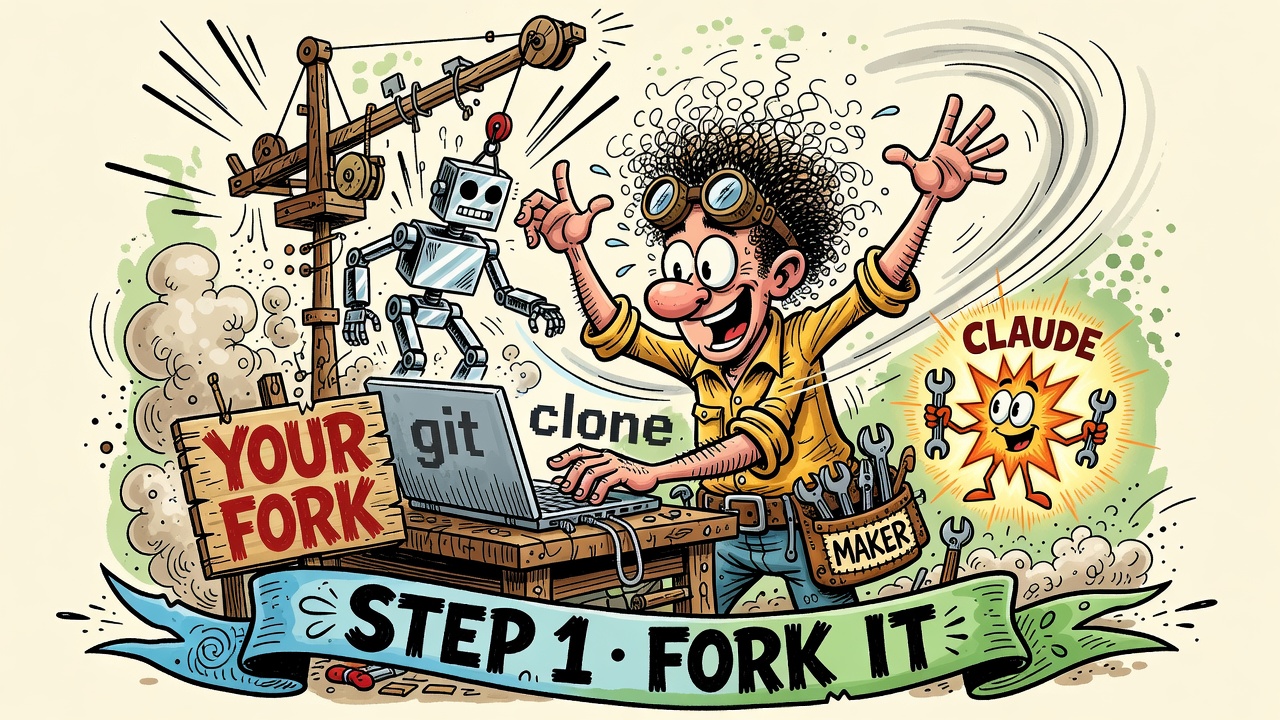
git clone, then claude) or as a remote session on the web.
The skeleton lands on your bench; the original stays untouched.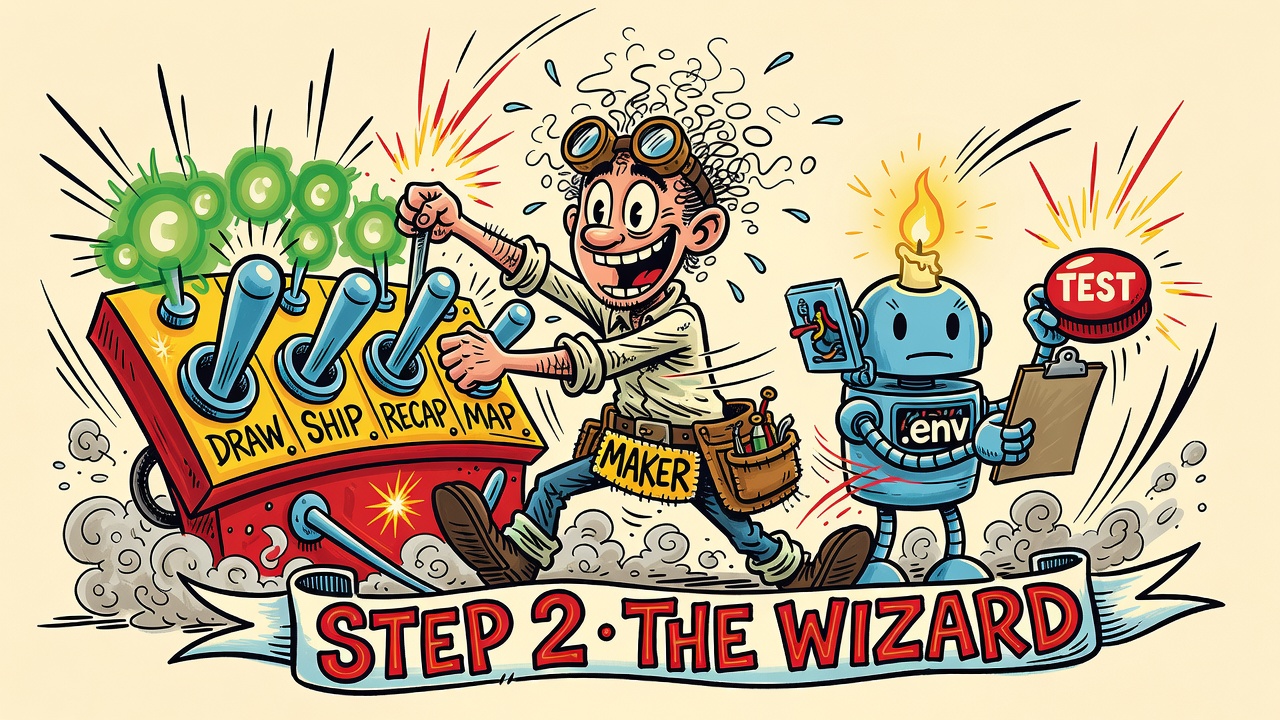
python3 scripts/wizard.py and open
http://127.0.0.1:8532. Every feature has an on/off switch; every key has a card.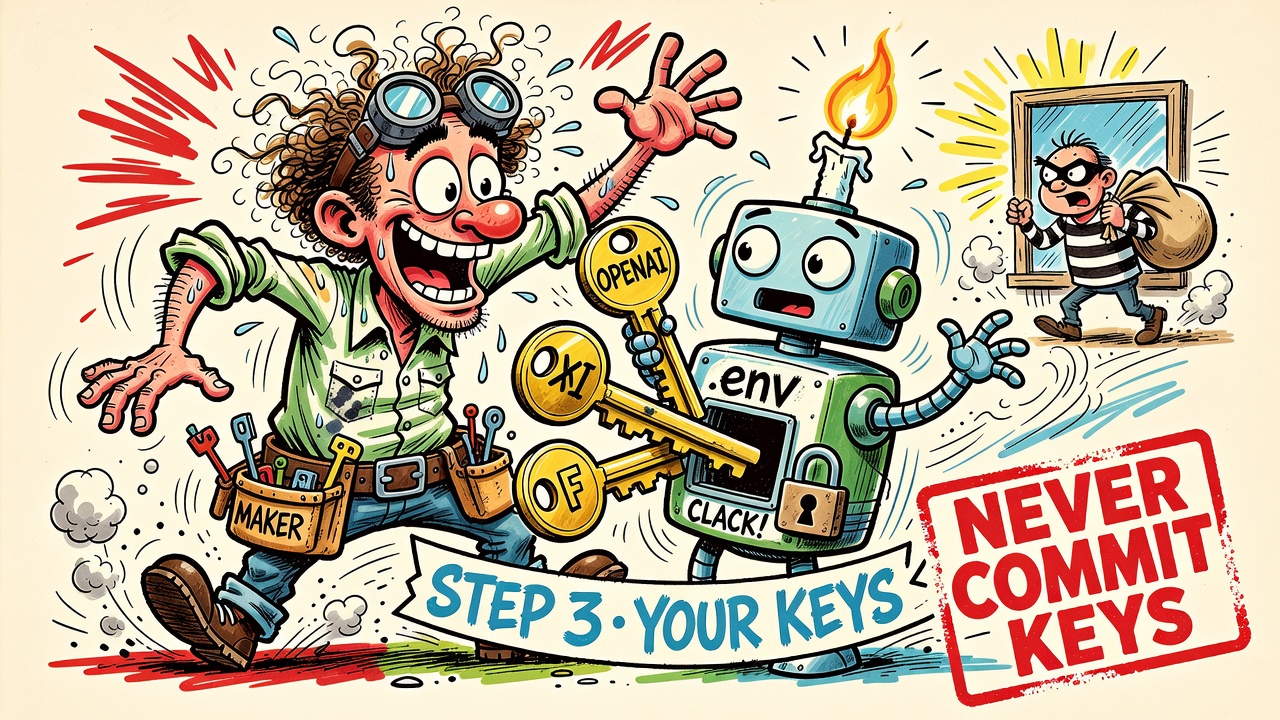
.env) — each card shows
what the key unlocks, a link to get a new one, and a Test button that probes the real API.
Fill what you have; empty slots are fine. And obey the stamp.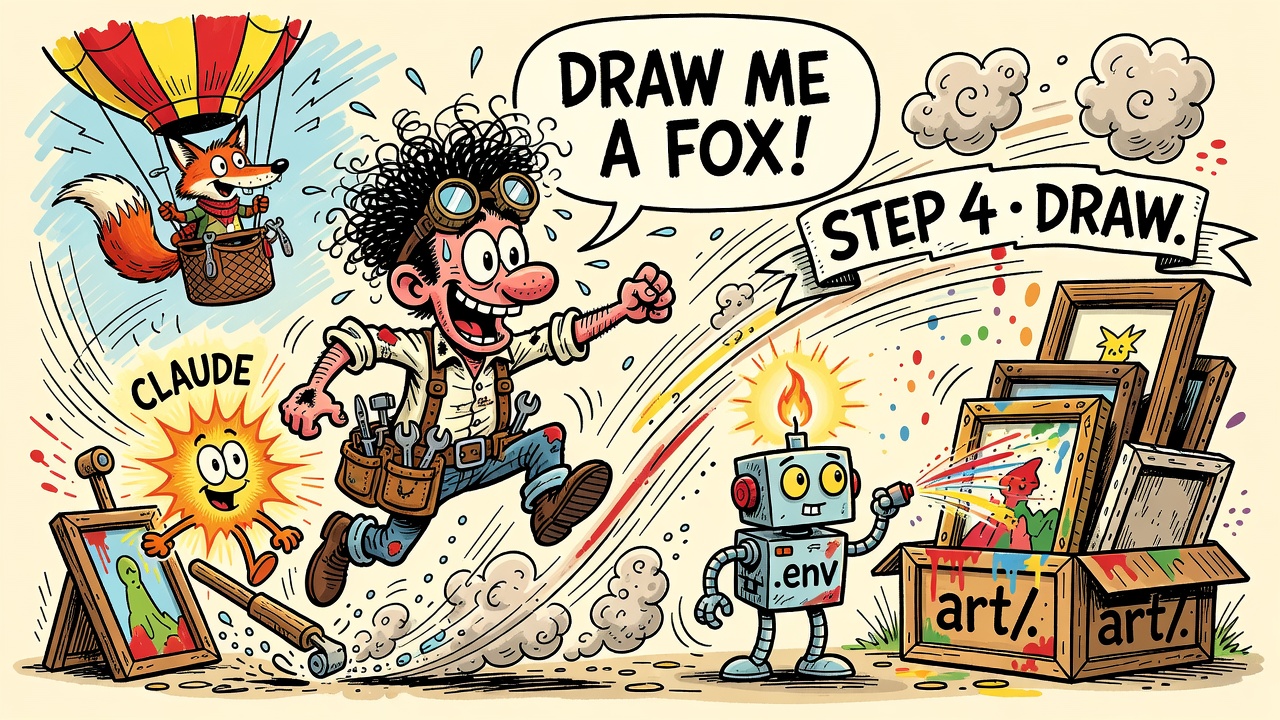
scripts/genimg.sh; finished frames stack up in art/.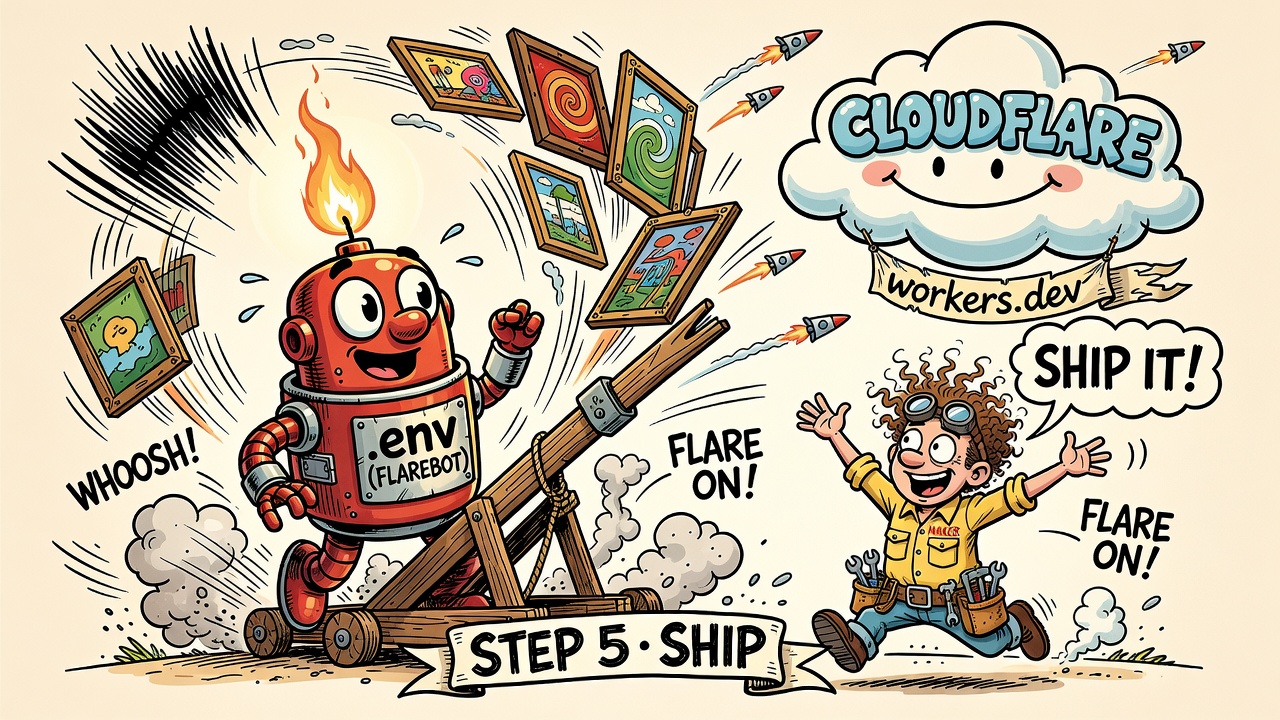
scripts/publish.sh builds a gallery page from
art/ and deploys it to Cloudflare — your work goes live at
<name>.workers.dev.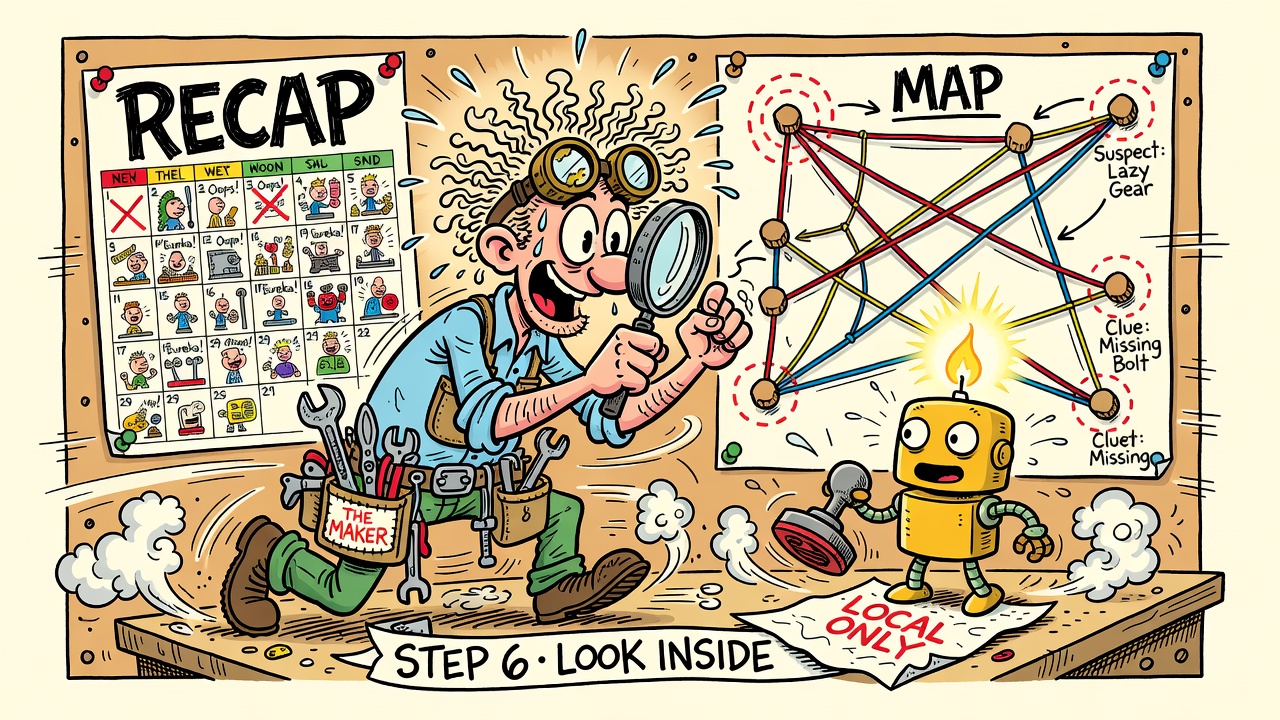
review/,
gitignored: local only, never shipped.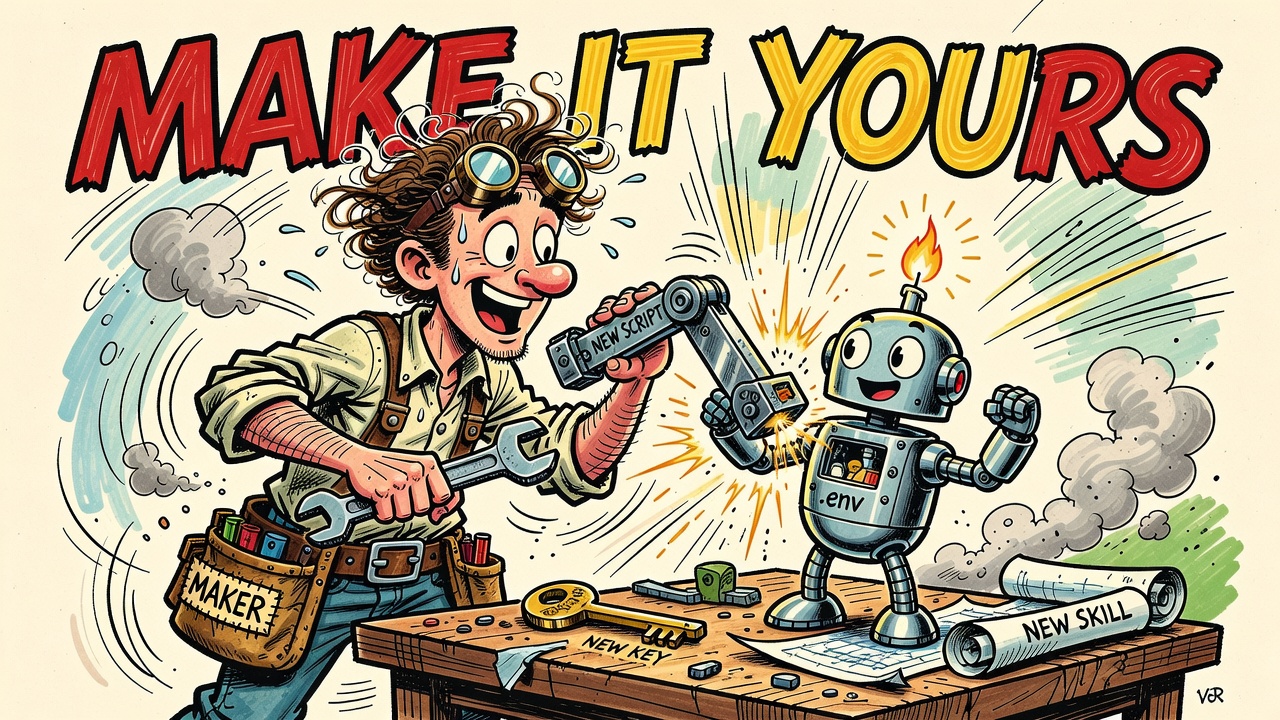
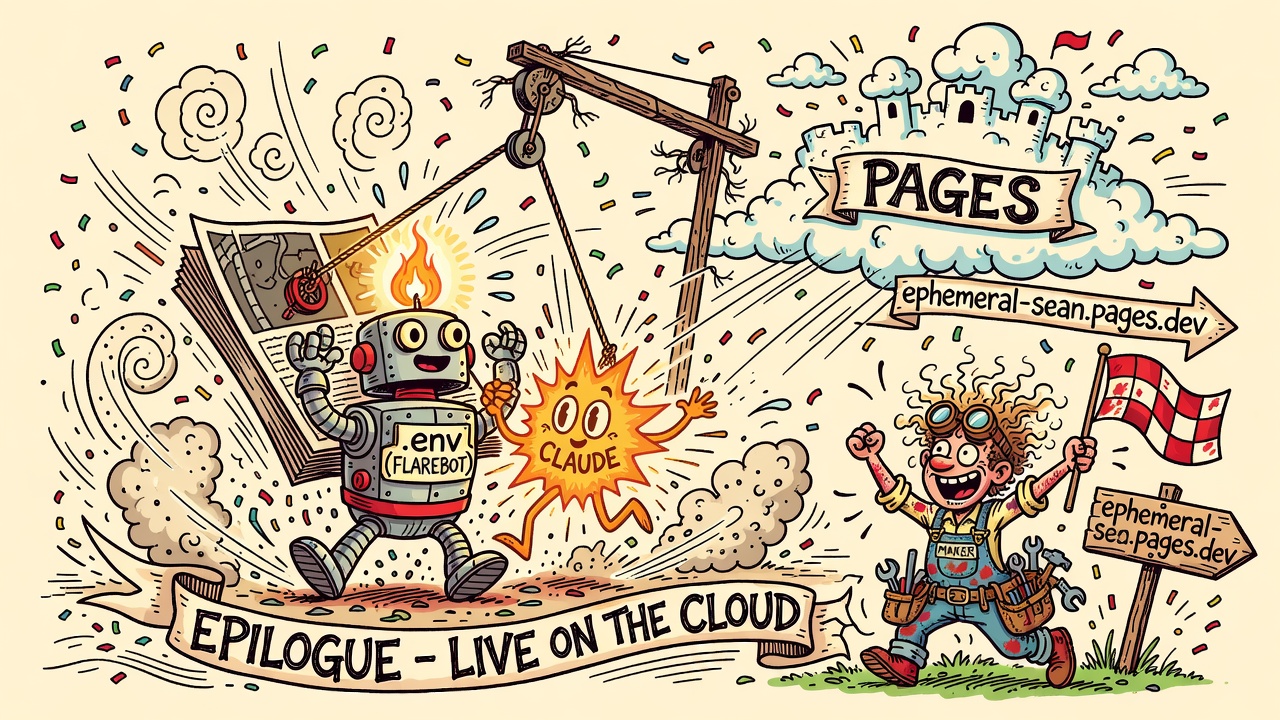
ephemeral-sean.pages.dev. The workshop published its own story.How to extend this
Every capability in flarebot has the same four-part shape. Copy it and the whole kit — the wizard, the doctor, Claude's operator manual — picks your new power up:
- A script in
scripts/— bash + curl + python3 only, so it runs the same on a laptop and in a remote sandbox. It sources.envitself and fails loudly naming the key it wanted. (Look atscripts/genimg.sh— that's the template.) - A key slot in
.env.example— with a comment saying where to get the key. Add a matching entry to theKEYSlist inscripts/wizard.pyso it appears in the catalog with its own test button. - A row in
CLAUDE.md— the operator manual. One line in the tools table and Claude knows the new tool exists, what it costs, and when to reach for it. - Optionally, a skill in
.claude/skills/— a short SKILL.md gives the capability a name you can say out loud (“draw”, “ship”, “transcribe”, “tweet”…) and a toggle in the wizard.
Then tell Claude to run “map the repo” again — your new arm shows up as nodes and edges, red until you test it.
NEVER COMMIT KEYS — .env is gitignored; if one ever leaks into a commit,
rotate it at the provider. Deleting the commit is not enough.
review/ STAYS LOCAL — recap & map are instruments, not cargo.
Publishing is always a deliberate copy into art/ + “ship it”.